
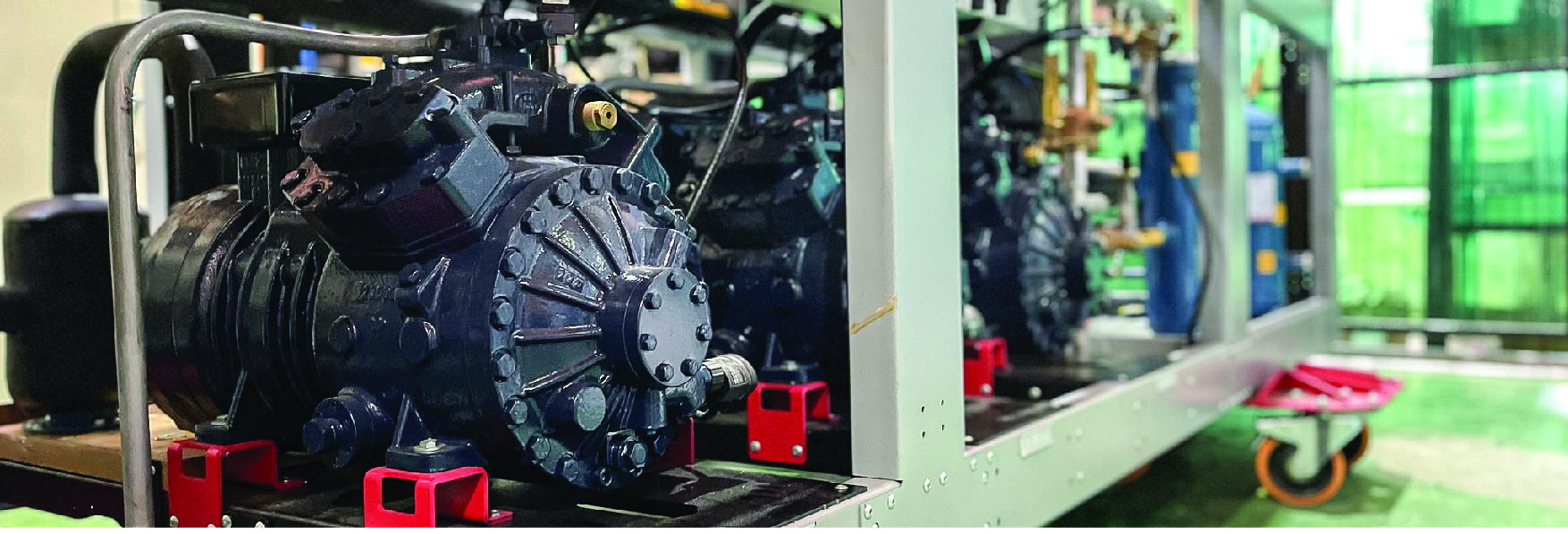
Understanding Semi-Hermetic Compressors in CO₂ Systems
Semi-hermetic compressors play a crucial role in modern HVAC/R systems, especially those utilising CO₂ as a refrigerant. These compressors are engineered to handle the high pressures and demanding conditions unique to CO₂ systems, particularly in transcritical applications. This article explores the construction, operation, and specific design considerations of semi-hermetic compressors used in CO₂ refrigeration and cooling systems.
Construction and Operation
Semi-hermetic compressors are designed with the motor and compression unit housed within a single casing that can be opened for inspection, maintenance, and repairs. This design contrasts with fully hermetic compressors, which are sealed and cannot be serviced internally. The semi-hermetic design enhances the compressor’s serviceability, making it particularly valuable in CO₂ systems, where the operational conditions are more demanding.
These compressors operate on the principles of positive displacement. Low-pressure refrigerant vapour enters the compressor through the suction valve during the suction phase. The movement of the piston or rotor creates a vacuum that draws in the refrigerant. In the compression phase, the piston or rotor reduces the volume of the gas chamber, compressing the refrigerant vapour. As the volume decreases, the pressure and temperature of the refrigerant increase. Finally, during the discharge phase, the refrigerant, now at a higher pressure, is expelled through the discharge valve and sent to the condenser for further processing.
High-Pressure Operation and CO₂-Specific Design Considerations
CO₂ systems operate at significantly higher pressures compared to traditional refrigerants like R134a or R410A. For instance, in transcritical CO₂ systems, pressures can exceed 120 bar, particularly in the gas cooler/condenser stage. Semi-hermetic compressors designed for CO₂ are built to withstand these extreme pressures through reinforced casings, high-strength materials, and precise engineering. HC Heat Exchangers, a leading OEM in the industry, utilises compressors designed to exceed pressures beyond 150 bar, ensuring robust operation under the most challenging conditions.
Key Design Features for CO₂ Systems:
Robust Construction: These compressors are designed with thicker walls, stronger fastenings, and enhanced seals to handle the high pressures typical of CO₂ systems. The robust design ensures durability and reliability, even in harsh operating environments.
Enhanced Motor Cooling: Due to the higher pressures in CO₂ systems, more heat is generated. To prevent overheating, the motor cooling system is optimised, often with suction-gas cooling.
Oil Compatibility: The lubricants used in CO₂ compressors must be compatible with CO₂’s chemical properties and remain effective under high pressures and temperatures. Proper oil management is critical to ensure effective lubrication and avoid breakdowns.
Leak Prevention: CO₂’s high pressure means that even small leaks can lead to significant losses and potential system failures. Advanced sealing techniques are employed in semi-hermetic compressors to minimise the risk of leaks.
Application in Transcritical CO₂ Systems
In transcritical CO₂ systems, the compressor operates in a cycle where the refrigerant does not condense into a liquid at the gas cooler outlet but instead cools down to a high-pressure vapour. The compressor must manage these extreme pressures and temperatures efficiently. Semi-hermetic compressors are ideal for this application due to their robust construction and serviceability.